
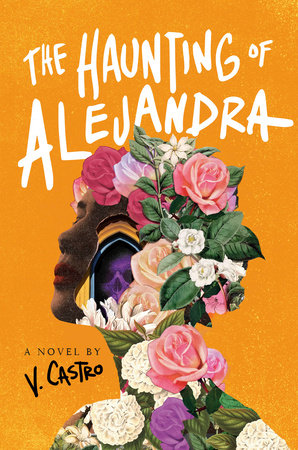
Year published: 2023
Category: Horror
Representation: Bisexual main character, trans male side character
Summary: To her own adoptive mother, she is a daughter. But they cannot see who Alejandra has become: a woman struggling with a darkness that threatens to consume her.
Nor can they see what Alejandra sees. In times of despair, a ghostly vision appears to her, the apparition of a crying woman in a ragged white gown.
When Alejandra visits a therapist, she begins exploring her family’s history, starting with the biological mother she never knew. As she goes deeper into the lives of the women in her family, she learns that heartbreak and tragedy are not the only things she has in common with her ancestors.
Because the crying woman was with them, too. She is La Llorona, the vengeful and murderous mother of Mexican legend. And she will not leave until Alejandra follows her mother, her grandmother, and all the women who came before her into the darkness.
But Alejandra has inherited more than just pain. She has inherited the strength and the courage of her foremothers—and she will have to summon everything they have given her to banish La Llorona forever.
My thoughts: This book demonstrates one of the starkest contrasts between premise and execution I’ve read in a while. The fundamental idea of exploring Latina women’s intergenerational trauma, internalized hatred, and complicated relationships with family and motherhood through the predatory specter of La Llorona is a truly rich one. But in my opinion, The Haunting of Alejandra fumbled through this premise with flat characters, painfully direct and cursory messages, and some of the most wooden writing I’ve read in a long time.
To me, this is a pretty striking example of how weak writing can detract from a reading experience. Every time I started to get interested in what was happening in the story, I’d encounter writing that was distractingly awkward and clunky to jar me out of my enjoyment.
“It’s why she felt attracted to him: he was someone different from her.”
“His hands were around the waist of the woman. It was in the shape of a woman who had never carried children.”
“She guided this baby into the world through her physical tunnel, and she wished she had her mother to guide her through the emotional tunnel of childbirth.”
The three main weaknesses I identified – prose, characterization and messages – tended to combine in a really painful way during Alejandra’s therapy sessions. What could have been an emotional and complex exploration of trauma’s legacy and healing never felt more than shallow and painfully heavy-handed to me, and all of it was conveyed in wooden dialogue between characters who never approached feeling real.
“You do need help to heal your mind and heart. Work through the trauma of your past to help you cope with your present.”
“Wow. I know an entity is attacking me. And say you are right and it is La Llorona, why me?”
There were also flashbacks to Alejandra’s female ancestors, and these were quite repetitive. All of them were trapped in unhappy and/or abusive marriages, had sex that they regretted and felt alienated about motherhood and traditional feminine roles. Then La Llorona would inevitably arrive to be described the exact same way multiple times and wreak havoc upon them. Perhaps with the exception of Flor, none of these women felt like distinct people at all.
There were a couple of scenes where Castro’s messages were conveyed at incredibly jarring times, such as when a woman who was in labor while suffering from a gunshot wound paused to contemplate to herself that it’s fine for some women to enjoy housework as long as they aren’t pressured into by their husbands, whose expectations of marriage are also shaped by society’s expectations in turn lol. The characters’ (limited third person) internal monologues tended to be phrased in strange anachronistic ways, such as when Alejandra’s mother (a teen at the time) reflected that she “knew [her father] was doing his best as a single father at a time when mothers and fathers had their own domains.”
As I said at the start, the premise is a rich one, and I truly wish that this book had been reworked and refined until it got to a place of doing the idea justice. As I read it, it did not succeed for me in its execution and just felt awkward and underdeveloped.
(I received an ARC copy of this book from NetGalley, and that is what I reviewed here.)
 Charlotte Kersten
Leave a comment