
“Governments didn’t have to listen to the people until the people made it hurt not to listen.”
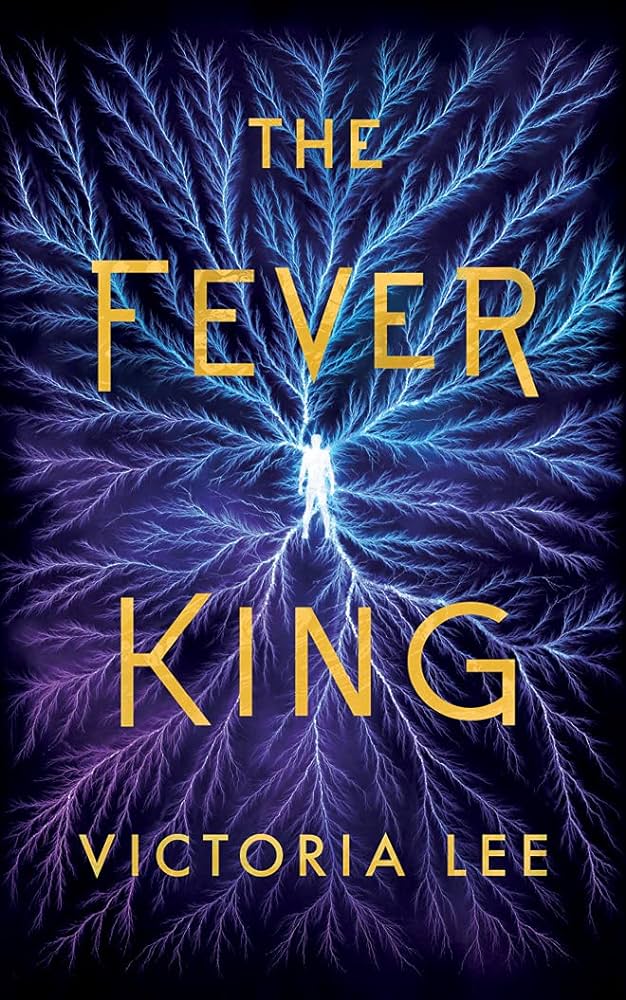
Year published: 2019
Category: YA sci fi/dystopian
Representation: gay main character and side characters
CW: Torture, grooming, emotional and sexual abuse of minor characters, alcohol and drug abuse, anorexia, suicidal ideation, genocide
Summary: In the former United States, sixteen-year-old Noam Álvaro wakes up in a hospital bed, the sole survivor of the viral magic that killed his family and made him a technopath. His ability to control technology attracts the attention of the minister of defense and thrusts him into the magical elite of the nation of Carolinia.
The son of undocumented immigrants, Noam has spent his life fighting for the rights of refugees fleeing magical outbreaks—refugees Carolinia routinely deports with vicious efficiency. Sensing a way to make change, Noam accepts the minister’s offer to teach him the science behind his magic, secretly planning to use it against the government. But then he meets the minister’s son—cruel, dangerous, and achingly beautiful—and the way forward becomes less clear.
Caught between his purpose and his heart, Noam must decide who he can trust and how far he’s willing to go in pursuit of the greater good.
My thoughts: Ultimately, this was just an okay read for me. The strongest part, by far, was the depiction of abuse and grooming. Everything else felt fairly standard for YA dystopia/scifi.
To start out with the negative and neutral elements, some of the things that I bounced off of were things that I tend to bounce off of in any sci-fi/dystopia books. There was a great deal of discussion of futuristic technology and Noam’s magic interacting with technology – I always find this kind of stuff incredibly boring, and my eyes glazed over in the many sections where Lee described Noam hacking things and navigating systems with his magic etc. It is possible that this wouldn’t be a problem for others, so take that criticism with a grain of salt.
The other thing that often happens with YA dystopia is vague world-building that leaves you with more questions than answers – in this case, there were interesting fundamental elements that unfortunately just never got fleshed out enough to feel totally actualized. I could tell that Lee wanted to bring up important themes regarding revolution and progressive politics, such as the pros and cons of non-violence and violence in achieving change – and yet the book’s exploration of these issues felt too superficial to be meaningful.
Finally, I found most of the book’s characterization to be mostly unremarkable with the exceptions of Dara and Lehrer. Noam’s characterization never felt particularly dynamic or strong to me, but this really became a problem for me when it came to the side characters, especially the other Level IV kids.
The book’s biggest strength, by far, was its depiction of grooming. So many things about this worked for me – Lehrer was a magnetic figure of authority who made an isolated, vulnerable kid feel important and special. He skillfully turned him against the others who could protect him and gradually ramped up the level of secrets that he trusted him with. I’m also really interested in the way that he manipulated Noam’s political idealism and naivety – an example that comes to mind is the way that he made the argument that a dictatorship is the highest form of democracy. There have been some really interesting conversations lately about abuse in progressive circles, and I think this book did a good job of demonstrating how easy it is for abusers to gain clout/power by simply saying all the right things and consequently manipulating progressive language/ideals for their own benefit.
I’ve seen some other reviews, including the most popular one on Goodreads, claiming that the relationship between Dara and Noam was poorly-written because of the level of miscommunication between them. I always have Strong Feelings when the incorporation of realistic depictions of trauma responses are deemed poor writing / character development, and that is true here as well. I thought that Lee did a great job of depicting Dara’s dilemma as another of Lehrer’s victims who was trapped between his feelings for Noam, the limits placed on anything he could do because of Lehrer’s mind reading and abuse, and the way he was spiraling in dysfunction because of the horrible situation he was in.
The book built to a very exciting conclusion, and there were enough strengths overall for me to decide to finish the duology.
 Charlotte Kersten
Leave a comment