
Year published: 2019
Category: Urban fantasy
Summary: Most ideas fade away when we’re done with them. Some we love enough to become Real. But what about the ones we love, and walk away from?
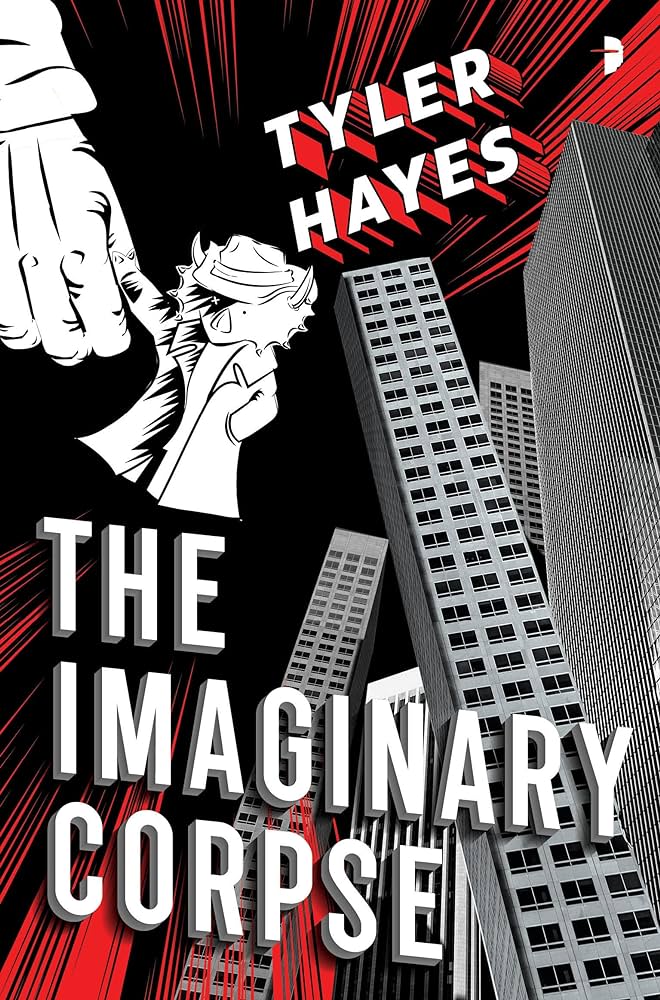
Tippy the triceratops was once a little girl’s imaginary friend, a dinosaur detective who could help her make sense of the world. But when her father died, Tippy fell into the Stillreal, the underbelly of the Imagination, where discarded ideas go when they’re too Real to disappear. Now, he passes time doing detective work for other unwanted ideas – until Tippy runs into The Man in the Coat, a nightmare monster who can do the impossible: kill an idea permanently. Now Tippy must overcome his own trauma and solve the case, before there’s nothing left but imaginary corpses.
My thoughts: My favorite part of this book by far is the inventiveness of the Stillreal, which I think is an amazing concept with the potential to be the setting for dozens of completely unique stories. The general premise is fleshed out with plenty of great details that bring it to life and make it seem like a truly vibrant, diverse place. In addition to the sheer inventiveness and scope of creativity, I really appreciate that the existence of the Stillreal and the Friends is fundamentally based on their peoples’ experiences of loss and trauma – and therefore the friends’ experiences of secondary loss and trauma.
This is an underlying theme that gets the most attention in the way that Tippy harshly criticizes himself and fundamentally believes that the other Friends don’t need or care about him. I somehow (????????????????) did an r/fantasy convention panel with Tyler Hayes earlier this year and really appreciated his answers about how his own experiences with social anxiety and trauma informed his writing of Tippy’s experience. It’s a portrayal that feels very true and genuine, and to me it stands as the book’s other great strength alongside the world-building. I love Tippy’s growth in this regard – by the end of the book he realizes how important he is to his friends and community and vows that his person’s terrible experiences will not destroy or control him.
I only have a few minor quibbles – principally, I’m kind of confused about how they end up catching The Man In the Coat. He gives up when the police officer arrests him, but he doesn’t give up earlier in the story when they catch him in a cage. This is explained in the text by Tippy realizing that The Man In the Coat acts according to his person’s conceptualization of “what criminals do,” but I just don’t quite understand why he gave up in one situation and not the other. It’s entirely possible that I just misread or missed something here, and I’d be glad to hear anyone else’s understanding of this. Otherwise, Tippy’s voice feels a little strange to me at some points – he’s supposed to be a cynical, quippy, hard-boiled detective but a lot of what he says doesn’t really land that way at all even when Tippy seems to feel that it does. He states that his person made him as cynical as she knew how to as a very young girl and this basically explains why he comes off the way he does, but it does sometimes feel a little awkward. There is also a LOT of exposition. Finally, once I noticed how many times characters are described as snorting, smirking and sneering I really couldn’t stop noticing it. Overall, though, I’ve never read anything like this before and it definitely scratched an itch I didn’t know was there. I’m all for more genuine yet quirky reads about mental health struggles in deeply inventive settings.
 Charlotte Kersten
Leave a comment