
So What’s It About?
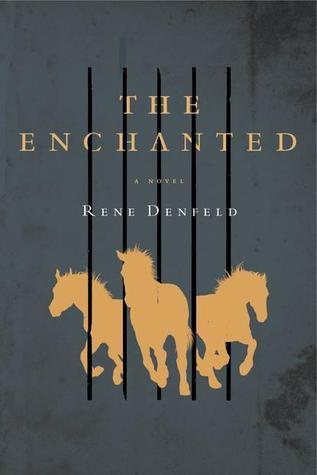
The enchanted place is an ancient stone prison, viewed through the eyes of a death row inmate who finds escape in his books and in re-imagining life around him, weaving a fantastical story of the people he observes and the world he inhabits. Fearful and reclusive, he senses what others cannot. Though bars confine him every minute of every day, he marries magical visions of golden horses running beneath the prison, heat flowing like molten metal from their backs, with the devastating violence of prison life.
Two outsiders venture here: a fallen priest, and the Lady, an investigator who searches for buried information from prisoners’ pasts that can save those soon-to-be-executed. Digging into the background of a killer named York, she uncovers wrenching truths that challenge familiar notions of victim and criminal, innocence and guilt, honour and corruption-ultimately revealing shocking secrets of her own.
What I Thought
This isn’t an easy read by any means, but I am certainly glad that I read it. It reminds me a lot of the more recent Notes on an Execution in its unflinching exploration of how “monsters” who commit terrible violence are made and how we think about them and treat them.
What I particularly love here is how beautiful this story is despite its incredible darkness. We see our Monsters as people with interiority – they cherish beauty in the world, they want to live or die, they think about love as they know it, they have often been shaped by the Monsters of their own lives.
Our main character’s rapturous love of the world and its beauty is incredibly written. Things that we take for granted outside of confinement like the sky, the birds, the taste of fresh water, become marvels to savor through his perspective after years of deprivation.
The magical realism elements can be to some extent attributed to our protagonist’s vibrant imagination and his love for fiction, but there are strange, inexplicable elements that interact with the rest of the prison and cannot be accounted for by individual imagination alone. I think I see them as part of the protagonist’s remarkable way of seeing the world and part insistence that there is beauty in the world (and in the mind/soul) that cannot be stamped out by the horror and inhumanity of what these men have done and what is done to them in turn in incarceration.
My own journey with the topics explored in this book has been one of stepping into rage and fear and uncertainty, especially when it comes to retributive justice, carceral violence, and the trajectory of “men like me” – how they come to be, what might stop them from becoming what they become, and how to answer their harm when it is done. I think there will be rage and fear and uncertainty for many when reading this book. For me at least, those feelings did not stand alone, and they were made incredibly memorable because of the book’s beauty and unflinching compassion.

 Charlotte Kersten
Leave a comment